

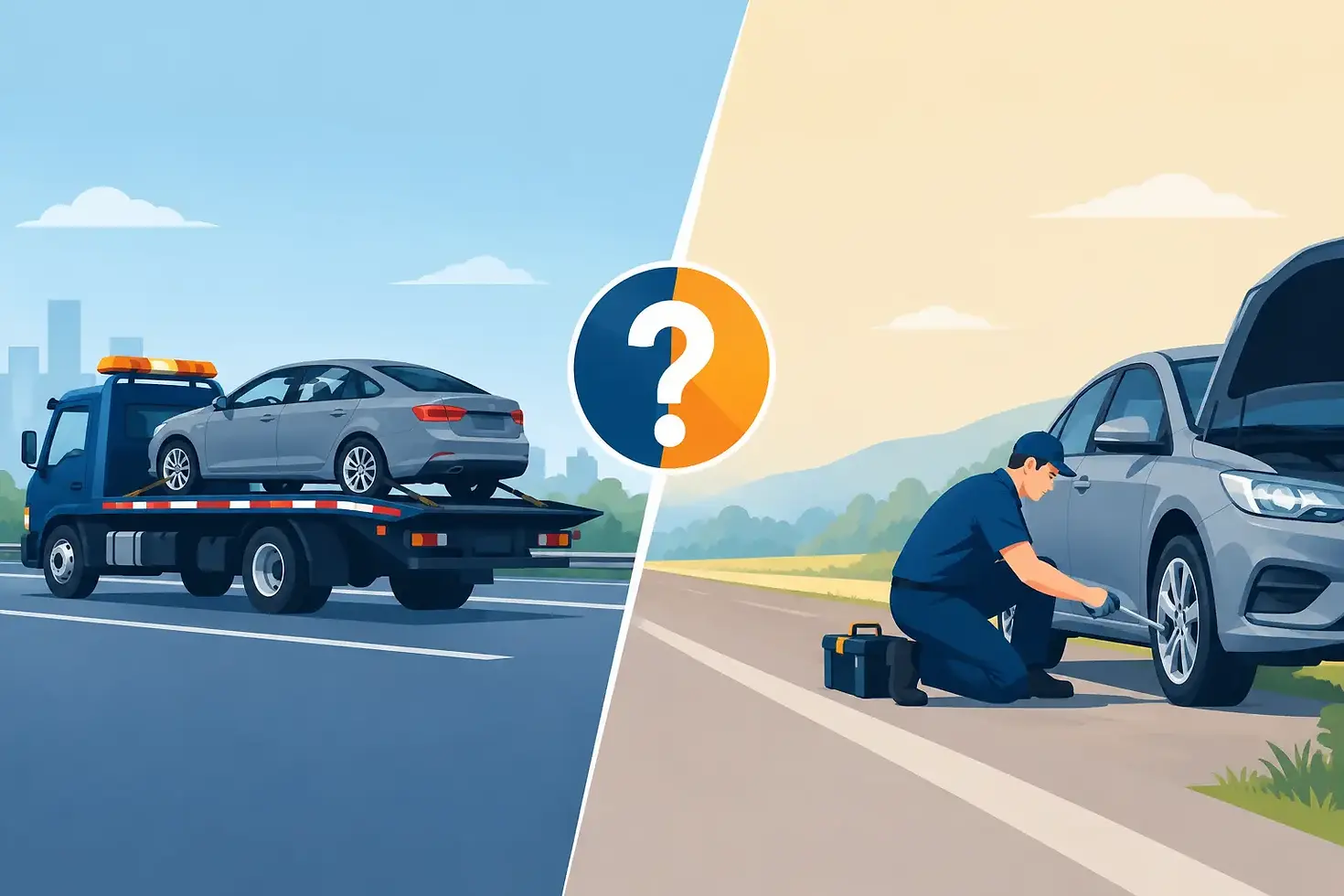
Towing Versus Roadside Repair: What Comes First?

A car that will not start in a basement carpark at 7 a.m. creates one immediate question: can it be fixed where it is, or does it need to be towed? Towing versus roadside repair is not simply a choice between two services. It determines how quickly you get moving, whether further damage is avoided, and whether your vehicle is handled safely from the start.
For many breakdowns, a trained mobile technician can diagnose and resolve the problem on the spot. For others, recovery is the responsible next step because the vehicle needs workshop equipment, deeper inspection, or safe transport after an accident. The right answer depends on the fault, the location, and whether the car is safe to operate.
When Roadside Repair Is the Faster Option
Roadside repair makes sense when the problem is contained, accessible, and can be repaired without putting the driver, technician, or other road users at risk. It is often the fastest route back on the road because there is no wait for vehicle loading, transport, and workshop intake.
A flat or failed battery is a common example. If testing shows that the battery is the source of the no-start condition, a jumpstart or on-site battery replacement can restore power immediately. A professional technician should still check for signs of a charging issue, such as warning lights, repeated battery failures, or weak cranking after a recent replacement. Replacing a battery without checking the likely cause can leave you stranded again later.
Tyre problems can also be suitable for roadside work. A puncture may be patchable if the damage is within the repairable area and the tyre structure has not been compromised. If the tyre has a sidewall cut, severe tear, exposed cords, or has been driven flat for too long, replacement is usually safer than a patch. A mobile tyre replacement can save time when the correct size is available and the vehicle is otherwise roadworthy.
Lockouts, flat batteries caused by lights left on, and certain starter-related faults may also be resolved where the car is parked. This is particularly useful when the vehicle is in a residential carpark, office building, shopping center, or a location where arranging a tow is inconvenient.
The benefit is not only convenience. A proper roadside repair lets you avoid unnecessary recovery costs while addressing an urgent fault with professional tools and experience. It also prevents risky DIY attempts, such as forcing a door lock, fitting the wrong battery, or driving on a damaged tyre.
Towing Versus Roadside Repair: When Recovery Is Safer
Towing is the better option when driving the vehicle could worsen the damage or create a safety hazard. A tow is not a failure of roadside service. It is the correct escalation when the fault requires workshop diagnostics, lifting equipment, specialist parts, or controlled repair conditions.
If the engine is overheating, do not keep restarting or driving the car in the hope that it will settle. Low coolant, a failed water pump, a damaged hose, or a cooling-system leak can lead to major engine damage if ignored. The same applies to an oil-pressure warning light, heavy smoke, burning smells, fuel leaks, or loud mechanical knocking. These are situations where stopping early can protect the engine and reduce the repair bill.
Transmission problems are another reason to arrange recovery. A car that will not engage gears, slips badly, jerks severely, or shows a transmission warning should not be forced to travel. Some vehicles also require specific towing methods to prevent drivetrain damage. Professional vehicle recovery ensures the car is loaded and transported in a way that matches its condition and drivetrain configuration.
After an accident, towing may be necessary even when the vehicle appears able to move. A damaged bumper can rub against a tyre, a bent suspension component can affect steering, and fluid leaks may not be obvious at first glance. If airbags have deployed, wheels are misaligned, lights are broken, or body panels are loose, recovery is generally the safer choice. The priority is to remove the vehicle carefully and arrange a proper assessment.
A tow is also appropriate when repeated roadside attempts have not identified the fault. Modern vehicles rely on interconnected electrical systems, sensors, control modules, and charging components. A no-start issue may look like a flat battery but actually be caused by an alternator fault, starter motor failure, wiring issue, immobilizer problem, or deeper electronic diagnosis requirement. At that point, workshop testing is more efficient than replacing parts based on guesswork.
The Location Changes the Decision
The vehicle fault matters, but so does where it happened. A simple repair in a quiet carpark may be practical, while the same issue on an expressway shoulder may require a more cautious approach. Traffic, poor visibility, rain, road layout, and the ability to position service vehicles safely all affect what can be done on site.
If your car stops in an unsafe location, move yourself and passengers away from traffic where possible. Turn on hazard lights, avoid standing near moving vehicles, and do not attempt a repair in an exposed lane. A professional assistance team can assess whether the car can be made safe and repaired there or whether it should be recovered promptly.
In multistory carparks, low clearances and tight turns can affect towing access. This is where an experienced recovery provider matters. They can determine the right equipment and recovery approach rather than causing additional damage while trying to remove a vehicle from a confined space.
What a Professional Assessment Should Cover
The best roadside response is not a rushed decision to tow every car or repair every car where it sits. It starts with a practical assessment. The technician should ask what happened before the breakdown, check visible warning signs, test the relevant system, and explain what can realistically be done at the location.
For example, a battery issue should include voltage and charging checks where appropriate. A puncture should be inspected for its position and severity. A non-starting vehicle should be assessed for battery condition, starter operation, and signs of an alternator or immobilizer issue. Clear explanations help you make a decision without feeling pressured into an unnecessary service.
There are trade-offs. An on-site repair may get you moving quickly, but a temporary solution can still require workshop follow-up. Towing takes more coordination, but it can prevent the much higher cost of driving with an engine, transmission, suspension, or accident-related fault. The goal is not to choose the cheapest option in the moment. It is to choose the option that safely solves the real problem.
How to Help the Response Go Faster
When requesting assistance, share your exact location, vehicle make and model, symptoms, warning lights, and whether the car is blocking traffic or parked safely. Mention if the vehicle is in a basement, has been involved in an accident, or cannot shift into neutral. These details help the service team arrive prepared with the right tools, replacement parts, or recovery equipment.
Avoid repeatedly cranking a vehicle that will not start. Do not drive on a visibly flat tyre, continue after an overheating warning, or attempt to push an automatic vehicle through traffic. A few minutes of caution can prevent a manageable breakdown from becoming a major repair.
For drivers in Singapore, On Site Car Accessories.sg provides 24/7 mobile assistance for common breakdowns, along with professional towing and workshop support when an on-site fix is not the safe answer. The aim is simple: resolve the issue quickly when possible and recover your vehicle carefully when necessary.
When your car stops unexpectedly, do not let urgency force a risky decision. Get a professional assessment, prioritize safety, and choose the repair or recovery method that gives your vehicle the best chance of returning to the road without further trouble.


Comments