

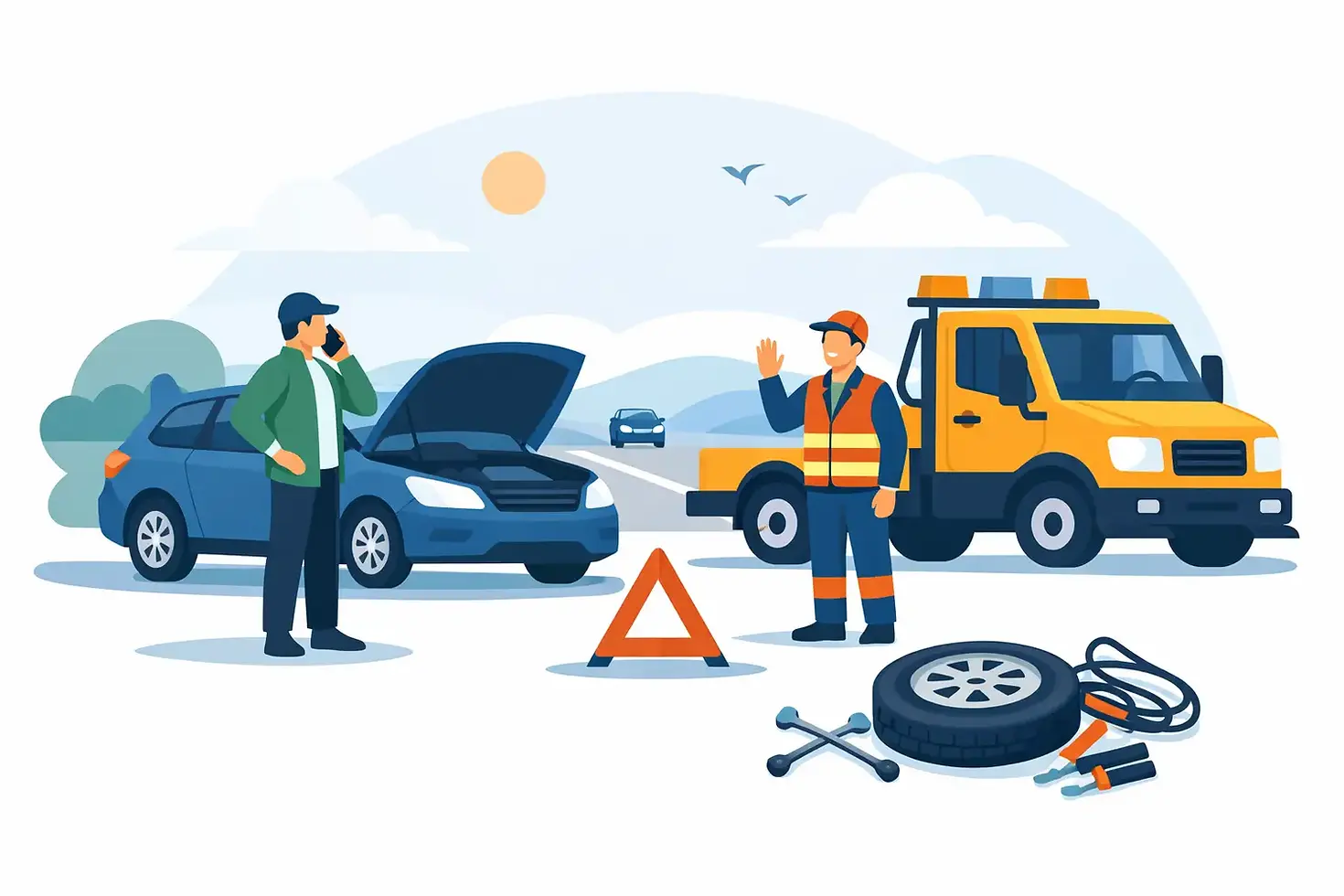
Roadside Assistance Guide for Drivers

A car that will not start at 6:30 a.m. in a basement parking lot is not a minor inconvenience. It can derail work, school drop-offs, deliveries, and your entire day. This roadside assistance guide for drivers is built for exactly that moment - when you need to stay calm, protect yourself, and get the right help fast.
In breakdown situations, the biggest mistake is treating every problem the same way. A dead battery, a punctured tire, a lockout, and an accident recovery all require different next steps. The safer and faster option is to identify the issue quickly, avoid unnecessary risks, and call for professional roadside support when the vehicle cannot be moved safely.
What to do first when your car breaks down
Your first priority is not fixing the vehicle. It is making the situation safe. If the car is still moving, ease off the accelerator, signal early, and steer to the shoulder or the safest nearby location. If you are in a parking garage, loading area, or side street, stop where the vehicle is least likely to block traffic or create a hazard.
Turn on your hazard lights immediately. If it is safe to exit, step out on the side away from traffic and move passengers to a protected area. If you are on a busy road and exiting is unsafe, stay inside with your seat belt on and call for assistance.
Once everyone is safe, take a quick look at what happened. Did the engine fail to crank at all? Did the dashboard light up but the car would not start? Is one tire visibly flat? Did you lock your keys inside? If there has been a collision, do not try to force the vehicle to move unless it is creating immediate danger.
A roadside assistance guide for drivers facing the most common problems
Most emergency calls fall into a handful of categories. Knowing which one you are dealing with helps you describe the issue clearly and get the right technician or towing support sent to you.
Dead battery or no-start condition
A dead battery is one of the most common reasons a car suddenly refuses to start. You may hear a clicking sound, see weak dashboard lights, or get no response at all when turning the key or pressing the start button. In some cases, the problem is not just the battery. It could be the starter or alternator.
This is where many drivers lose time. They try repeated restarts, drain the remaining power, and assume a jumpstart will solve everything. Sometimes it will. Sometimes it will not. If the battery is old, swollen, leaking, or no longer holding charge, replacement on-site is usually the faster fix. If the battery is new but the car still does not stay running, the alternator may be the real issue.
Flat tire, puncture, or tire damage
A slow puncture in a parking lot is very different from a tire blowout after hitting debris. If the sidewall is damaged, the tire may not be safe to patch. If the puncture is in a repairable area and caught early, a mobile tire patch can get you back on the road quickly.
Drivers often ask whether they should fit the spare themselves. It depends on the location, your tools, your experience, and the ground surface. On uneven roads, in bad weather, or in tight spaces, DIY tire changes can be risky. Professional on-site tire support is often the safer option.
Car lockout
Locking your keys in the car feels simple, but forcing the door open can damage trim, weather seals, glass, or the locking mechanism. Modern vehicles also make improvised entry attempts more complicated.
If you are locked out, the best move is to stop trying random methods and get proper locksmith assistance. It is faster, cleaner, and less likely to turn a lockout into a repair bill.
Accident recovery or a disabled vehicle
After an accident, even a car that still starts may not be roadworthy. Steering, alignment, suspension, tires, lights, and fluid lines can all be affected. Driving a damaged car to save time can make the situation worse.
If there is visible impact damage, leaking fluid, or the vehicle feels unstable, arrange recovery. A proper roadside team can assess whether the vehicle can be handled on-site or needs towing to a workshop for diagnostics and repair.
When roadside help is better than DIY
There is a time for simple checks and a time to stop experimenting. If your car is in a safe location and the issue is minor, you can check basic signs like battery response, visible tire damage, warning lights, and whether the gear selector is fully in park. Beyond that, it is usually smarter to call.
DIY becomes a poor option when you are on an expressway shoulder, in a dark parking lot, during heavy rain, with children in the car, or when the problem could involve electrical or mechanical failure. It also depends on the vehicle. Many newer cars have tighter engine bays, more electronics, and less room for trial-and-error fixes.
Fast roadside service is not just about convenience. It reduces exposure to traffic, avoids accidental damage, and gets the correct repair started earlier.
What to tell a roadside assistance provider
The speed of help often depends on how clearly you describe the problem. Start with your exact location, including parking level, block number, nearby landmark, or road direction if applicable. Then explain what the car is doing or not doing.
Helpful details include the car make and model, whether the engine cranks, whether any warning lights are on, whether the tire is fully flat or slowly losing air, and whether the vehicle is blocking traffic. If there has been an accident, mention whether the car can roll and whether there is visible damage or fluid leakage.
Good roadside support works faster when the technician arrives prepared. A jumpstart setup, battery replacement, tire service, locksmith tools, or towing arrangement may all depend on the details you provide.
What a strong roadside service should offer
Not all roadside support is equal. Some providers only tow. Others only handle one or two simple issues. The better option is a team that can perform real on-site diagnosis and repair, then arrange workshop follow-up if the job cannot be completed at the roadside.
That matters when the problem is not obvious. A car that will not start may need more than a jump. A battery issue may actually be a charging problem. A damaged tire may need replacement, not patching. A breakdown after a collision may require careful recovery rather than a quick tow-and-go approach.
This is why many drivers prefer a 24/7 mobile service backed by workshop support. You get immediate help where the vehicle is stranded, but you also have a clear next step if the fault is more serious.
How to prepare before you ever need this roadside assistance guide for drivers
Breakdowns rarely happen at a convenient time. A little preparation makes the call faster and the delay shorter. Keep your phone charged, know where your wheel lock key is if your car uses one, and save a trusted roadside number before you need it.
It also helps to replace weak batteries early, inspect tires regularly, and pay attention to warning signs you have been putting off. Slow cranking, dim lights, repeated low-tire alerts, and intermittent starting issues usually do not fix themselves. They become emergency calls later.
If you drive daily for work, school runs, or family routines, preventive checks are not overkill. They are part of keeping your schedule intact.
Why speed matters in roadside assistance
Waiting hours for help can turn a manageable problem into a bigger one. Heat, rain, traffic exposure, parking restrictions, and missed appointments all add pressure. That is why response time matters as much as technical skill.
A provider that can reach you quickly, assess the issue properly, and complete common repairs on-site saves more than time. It reduces stress and lowers the chance that a simple failure becomes a full-day disruption. For drivers in urgent situations, that difference is significant.
On Site Car Accessories.sg is built around that reality, with 24/7 mobile support and a response target within 45 minutes for common roadside emergencies. For drivers, that means fewer handoffs, faster answers, and a clearer path from breakdown to recovery.
The best roadside plan is simple: stay safe, avoid guesswork, and get qualified help as soon as the car tells you something is wrong. A breakdown is stressful, but the right response keeps it from becoming bigger than it needs to be.


Comments