

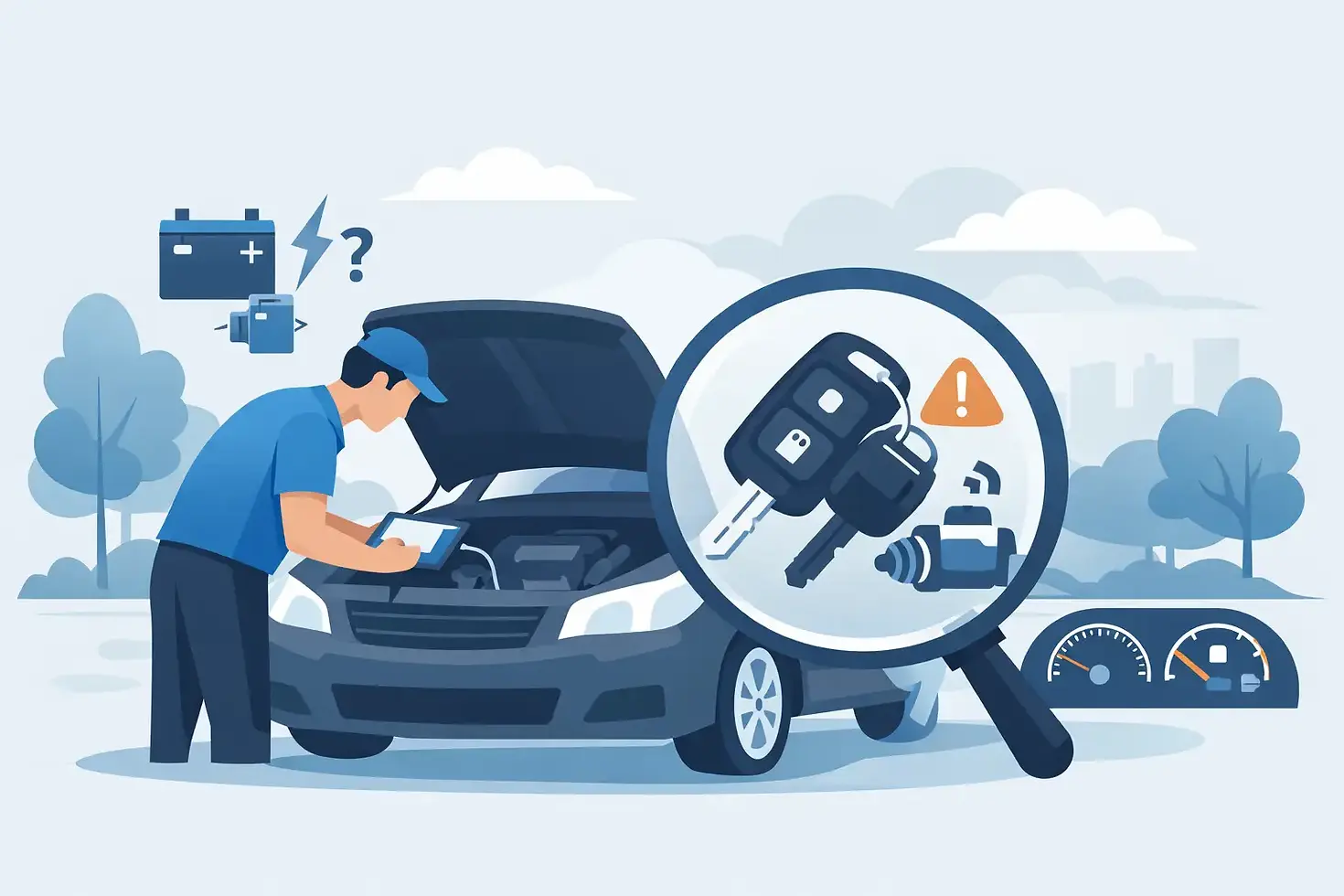
Car Won't Start Diagnosis: What to Check First

A car that will not start in a carpark, outside your office, or on the roadside creates an immediate problem: you cannot safely get where you need to go. A proper car wont start diagnosis begins with what the vehicle does when you turn the key or press the start button. Does it stay completely silent, click once, crank slowly, or crank normally but refuse to fire up? That one detail helps narrow down the fault quickly.
For most drivers, the safest move is not repeated trial and error. Repeated starting attempts can flatten an already weak battery, flood some engines, or create more stress on a failing starter. Check the obvious signs, keep the vehicle in a safe position, and arrange professional help when the cause is unclear.
Start With the Sound and Dashboard Lights
The sound from the vehicle is usually the fastest starting point for a car won't start diagnosis. If there are no dashboard lights, no cabin lights, and no response when you try to start, the battery may be fully discharged or there may be a loose battery connection. If the lights come on but dim heavily during a start attempt, that also points strongly to a weak battery.
A rapid clicking sound is commonly linked to insufficient battery power. One solid click with the lights still working may indicate a starter motor or starter solenoid issue. If the engine cranks at normal speed but does not start, the battery may not be the main issue. Fuel delivery, ignition, immobilizer faults, or engine sensors become more likely.
Do not assume every no-start problem needs a jumpstart. A jumpstart can get a vehicle moving when the battery is discharged, but it will not repair a failing alternator, worn starter, damaged battery cable, or fuel-related fault.
Dead Battery or Charging Problem?
A flat battery is one of the most common reasons a car will not start, especially after the vehicle has been parked for several days, used mainly for short trips, or left with interior lights or accessories on. Singapore's heat can also shorten battery life over time. A battery that worked yesterday can weaken quickly once one cell fails.
Look for warning signs that appeared before the breakdown. Slow cranking, flickering lights, a start-stop system that stopped functioning, or the battery warning light while driving can all be clues. The battery warning light does not always mean the battery itself is bad. It can mean the alternator is not charging properly while the engine is running.
When a Jumpstart Is Enough
A jumpstart may be appropriate when the battery has simply discharged and the charging system is healthy. After the engine starts, it should run smoothly, and the battery warning light should remain off. However, driving around in the hope that the battery will recover is not a reliable test. If the car needs another jumpstart soon afterward, it needs a battery and charging-system check.
A mobile technician can test battery condition and charging voltage on-site. This avoids replacing a battery unnecessarily when the real fault is the alternator or wiring connection.
When Battery Replacement Makes More Sense
Battery replacement is often the practical solution when the battery is old, fails a load test, leaks, swells, or repeatedly loses charge. It is better to replace a confirmed weak battery at the breakdown location than risk another no-start situation during a school run, work commute, or late-night drive.
Starter Motor Problems Often Sound Different
The starter motor turns the engine over. When it fails, the car may have power in the dashboard and radio but still refuse to crank. You may hear a single click, a whirring noise, or nothing at all. In some cases, the vehicle starts intermittently for days before it finally stops responding.
Starter faults can be confused with battery faults because both prevent the engine from cranking. The difference comes from testing battery voltage, cable condition, starter signals, and current draw. This is why a professional diagnosis is useful before replacing parts.
If the vehicle is parked in a tight garage or carpark, starter replacement may or may not be possible on-site. It depends on access, the vehicle model, and whether additional components need to be removed. When the repair is too involved for a safe roadside job, towing the vehicle to a workshop is the better option.
If the Engine Cranks but Will Not Start
When the engine turns over normally but does not start, the issue is generally beyond a simple flat battery. Modern vehicles require the right fuel pressure, ignition spark, air supply, sensor readings, and immobilizer authorization before the engine will run.
A low fuel level is worth checking first, particularly if the car is parked on a slope or the gauge is unreliable. Do not rely entirely on the estimated driving range. For diesel vehicles, running very low on fuel can create additional complications that may need professional attention.
Other possible causes include a faulty fuel pump, blown fuse, crankshaft sensor issue, ignition coil failure, or an engine management fault. A check-engine light, unusual warning message, or previous rough running can help point a technician in the right direction. These faults need proper scanning and testing rather than guessing.
Check the Key, Smart Key, and Gear Position
Sometimes the vehicle itself is mechanically sound, but a safety system is preventing it from starting. For push-button vehicles, try holding the smart key close to the start button if the key-fob battery may be weak. A dashboard message such as “key not detected” or an immobilizer symbol can indicate a recognition problem.
Automatic vehicles must usually be in Park or Neutral before they will start. If the car does not respond in Park, try starting it in Neutral while keeping your foot firmly on the brake. Do not attempt this if the vehicle is in an unsafe position or could roll.
For manual vehicles, press the clutch pedal fully. A faulty clutch safety switch can also prevent starting. These small checks can save time, but avoid forcing the key, shifting repeatedly, or bypassing safety systems.
What Not to Do When Your Car Will Not Start
A breakdown is stressful, but a few actions can make the situation worse. Avoid repeated start attempts when the engine is not cranking properly. Do not use makeshift wires, incorrect battery terminals, or unapproved jumpstarting methods. Modern cars have sensitive electronics, and reversed polarity can cause expensive damage.
Avoid leaving the vehicle in a live traffic lane or trying to push it through a busy roadway. If you are stopped in an exposed location, switch on hazard lights when safe to do so, move passengers away from traffic, and arrange assistance. For accident damage, fuel smells, smoke, overheating, or electrical burning smells, do not attempt a jumpstart. Keep clear of the vehicle and seek immediate recovery support.
When to Call for 24/7 Assistance
Call for help when the car is immobilized, the cause is uncertain, or you do not have the correct tools to test it safely. A mobile response can handle common roadside causes such as battery replacement, jumpstarts, tyre problems, lockouts, and selected starter or alternator faults. More complex electrical, engine, or accident-related issues can be recovered and sent to a workshop for deeper diagnosis.
When you contact a service provider, share your vehicle make and model, location, parking level if applicable, and exactly what happens during the start attempt. Mention warning lights, clicking sounds, whether the engine cranks, and whether the car has recently needed a jumpstart. This helps the technician arrive prepared.
On Site Car Accessories.sg provides 24/7 mobile assistance for stranded drivers in Singapore, with on-site support and workshop backup when a repair cannot be completed safely at the location.
A no-start condition does not always mean a major repair, but it should not be ignored after the car is running again. The right diagnosis now can prevent the next breakdown from happening when you have no time to spare.


Comments