

Best Reasons Car Won't Start and What to Do

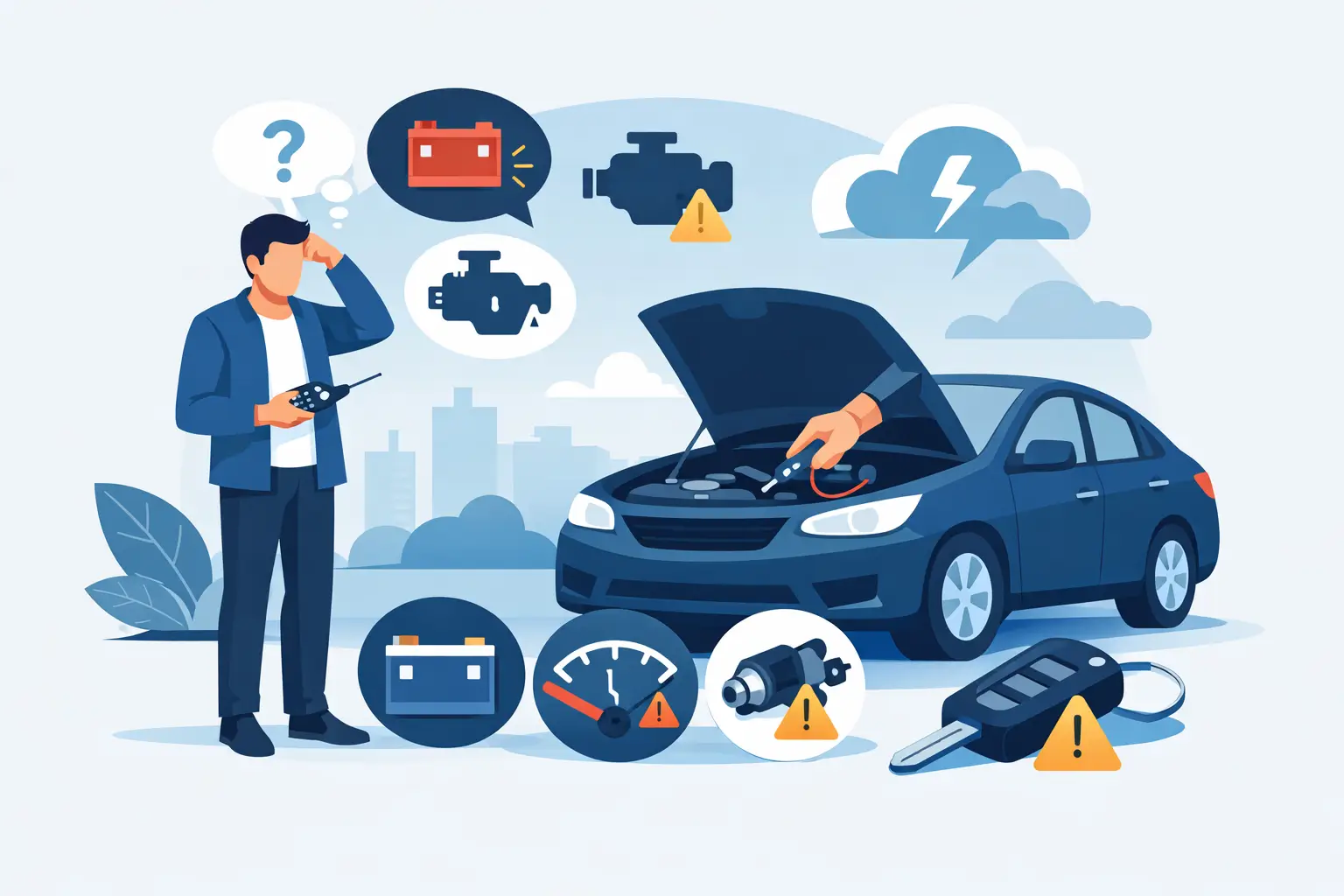
A car that will not start is rarely convenient. It can happen before work, in a shopping mall carpark, during school pickup, or on the roadside after a long day. The best reasons car won't start usually come down to a few common systems: battery power, the starter, fuel delivery, ignition, or an electronic security issue. The symptoms you notice before and during the start attempt can point to the likely fault.
Do not keep turning the key or pressing the start button repeatedly. That can drain a weak battery further, flood some older engines, or create more stress on a failing starter. Take a moment to check what the vehicle is doing, then decide whether a jumpstart, mobile repair, or towing is the safest next step.
Best Reasons a Car Won't Start
1. A weak or flat battery
A flat battery is one of the most frequent reasons a car will not start, especially in Singapore's heat and stop-start traffic. Batteries can weaken without much warning, although slow cranking, dim interior lights, a battery warning light, or electronics resetting are common clues.
If you turn the key and hear a rapid clicking sound, or the engine cranks very slowly, battery power is the first thing to suspect. Leaving lights on, a door not fully closed, a faulty accessory, or simply an aging battery can all cause the problem.
A jumpstart may get the car running, but it is not always the complete fix. If the battery is old, cannot hold a charge, or has an internal fault, it may leave you stranded again after the engine is switched off. A proper battery test helps determine whether you need a replacement rather than another jumpstart.
2. Corroded or loose battery terminals
A healthy battery cannot do its job if its connections are loose or heavily corroded. White, blue, or greenish buildup around the battery terminals can interfere with electrical flow. You may see dashboard lights but get no crank when trying to start.
Do not touch battery terminals with bare hands or try to force damaged clamps into place. Battery acid and electrical connections need careful handling. A technician can inspect the terminals, clean them correctly, and check whether the cable itself has deteriorated.
3. A failing starter motor or starter solenoid
The starter motor turns the engine over so it can begin running. When it fails, you may hear a single click when you attempt to start, while the dashboard lights remain on. In some cases, there may be no sound at all.
Starter faults can be intermittent at first. The car may start after several attempts, then refuse to start later in the day. Heat can also make a worn starter problem more noticeable after driving. This is not a fault to ignore, because repeated attempts can leave you stuck in a less safe location.
Starter replacement is generally not a roadside DIY job. The starter may be difficult to access, and the correct diagnosis matters. A weak battery, damaged wiring, and a faulty ignition switch can produce similar symptoms.
4. Alternator trouble that drained the battery
The alternator recharges the battery while the engine is running. If it is failing, the vehicle may start with a jump but stall soon afterward or fail to restart after a short drive. A battery warning light on the dashboard, headlights that dim while driving, or unusual electrical behavior can indicate a charging-system problem.
This is where a jumpstart alone can be misleading. The engine starts, which feels like a success, but the battery is not receiving enough charge to keep the car operating. Continuing to drive can lead to a breakdown in traffic or a complete loss of electrical power.
If an alternator fault is suspected, have the charging system tested before relying on the vehicle. Depending on the diagnosis and vehicle model, the repair may be handled on-site or require workshop support.
5. No fuel, contaminated fuel, or a fuel delivery fault
It sounds obvious, but an inaccurate fuel gauge, a recent loan of the vehicle, or a missed fuel stop can leave a car with too little fuel to start. Check the gauge first, particularly if the car cranks normally but does not fire up.
If there is fuel in the tank, the issue could be a failing fuel pump, blocked fuel filter, damaged relay, or injector-related fault. These issues often cause longer cranking before starting, hesitation while driving, or sudden stalling before the no-start condition occurs.
Avoid adding random fuel additives or repeatedly cranking the engine in hopes that it will clear. Fuel-delivery faults need proper testing. Forcing the issue may run down the battery and make the original problem harder to diagnose.
6. Ignition, spark plug, or engine sensor problems
For the engine to run, it needs the correct spark and timing. Worn spark plugs, failed ignition coils, crankshaft position sensor faults, and other engine-management issues can prevent the car from starting even when the battery is strong and the engine cranks normally.
You may notice a check engine light, rough running, misfires, or loss of power before the vehicle eventually refuses to start. Modern vehicles rely heavily on sensors, so the cause is not always visible under the hood. Diagnostic equipment is often needed to identify the fault accurately.
This is a situation where guessing can become expensive. Replacing parts without confirming the cause may not solve the problem. A mobile mechanic can assess basic starting and electrical conditions, then arrange safe recovery to a workshop if deeper diagnostics or repairs are required.
7. Key, immobilizer, or push-button start issues
Many newer cars use transponder keys, keyless entry systems, and immobilizers to prevent theft. When the vehicle does not recognize the key, the engine may not start even though the battery appears normal.
Look for a security or key-shaped warning light on the dashboard. If you have a spare key, try it. For push-button start vehicles, hold the key fob close to the start button or follow the vehicle's emergency-start procedure if you know it. A weak key fob battery can sometimes be the cause.
Do not force the ignition, pry open the key fob unnecessarily, or attempt to bypass the immobilizer. Locksmith assistance or professional diagnostics is the safer option, particularly if you are locked out as well as unable to start the car.
8. Gear selector, clutch, or brake switch faults
Automatic vehicles normally start only in Park or Neutral. If the gear position sensor is not recognizing Park, the car may not crank. Try firmly applying the brake and shifting to Neutral before trying again, but only when the vehicle is stationary and it is safe to do so.
For manual vehicles, a faulty clutch safety switch can prevent starting even with the clutch pedal pressed. Push-button start cars may also require the brake pedal switch to work correctly. If the brake lights do not illuminate when you press the pedal, that can be a useful clue.
These faults are often small components with a major effect. A professional inspection can confirm whether the problem is the switch, wiring, selector mechanism, or another part of the starting circuit.
What to Check Before Calling for Help
Start with safety. Put the vehicle in Park or Neutral, apply the parking brake, and switch off lights, air conditioning, and accessories. Check whether the dashboard lights come on, whether the engine cranks, and whether you hear clicking, a single clunk, or nothing at all.
If you suspect a flat battery and have suitable equipment, a jumpstart can be attempted carefully. Never jumpstart a damaged battery, a battery that is leaking, swollen, or giving off a strong sulfur smell. Do not attempt roadside repairs in an unsafe lane, on an expressway shoulder, or where traffic is close.
When contacting a mobile assistance provider, share the vehicle make and model, your location, whether the car cranks, any warning lights, and what happened before it failed to start. Clear details help the technician arrive prepared with the right equipment and likely replacement parts.
When a Mobile Mechanic or Towing Service Makes Sense
A jumpstart is appropriate when the battery is clearly weak and the car has no signs of a larger electrical problem. But if the vehicle starts and dies, has a battery warning light, smells of fuel, has smoke, overheats, or will not crank after a confirmed good battery, do not keep trying to drive it.
On Site Car Accessories.sg provides 24/7 mobile assistance for jumpstarts, battery replacement, starter and alternator concerns, lockout support, and vehicle recovery in Singapore. Where the repair cannot be completed safely on location, towing to a workshop protects both the vehicle and the driver from a riskier roadside situation.
A no-start problem does not always mean a major repair, but it does deserve the right response. Stay in a safe place, avoid repeated start attempts, and get qualified help before a simple battery, starter, or charging fault turns into a longer and more stressful breakdown.


Comments